Dev Log 3: Alpha
Environment Greyboxing
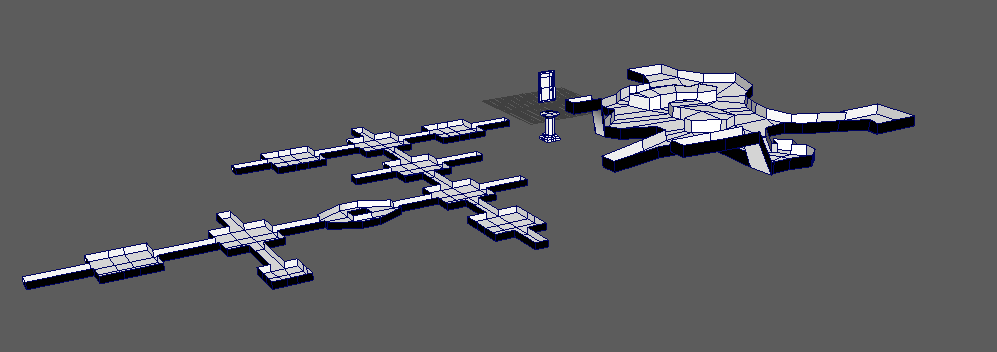
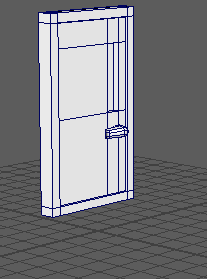
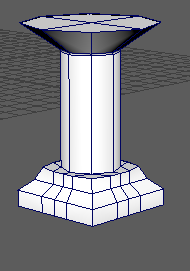
I took on something a bit out of my comfort zone, greyboxing the map for the dungeon and puzzle, along with some props for the map, being pillars for one of the dungeon rooms, and the door to Dr. Milvus’ office. Adam made the initial floor layout based on my layout plans, then passed it over to me to add walls, verticality, props, and to unpack the UVs for texturing. Getting the UVs for the puzzle was pretty easy, due to the fact that it was being left flat. However, the UVs for the dungeon took multiple attempts as modifying the verticality left the UVs unable to be properly unwrapped, so I had to do the dungeon over in order to properly unpack it.
Additionally, I made the pillars for the side room in the dungeon that has enemies walking around the pillars. I didn’t want it to be anything too crazy, as they aren’t the focus of the room; the enemies are. Therefore, I made a pillar that generally would fit in well with the rest of the environment. However, for the door to Dr. Milvus’ office, I went in the opposite direction, given its importance. It is a large door whose size would make sense for a large dungeon door, but instead, it is a door you would see in a doctor’s office, to further convey what this boss represents. These two props also have UVs for texture application.
Combat Calculator

Added a calculator to the combat spreadsheet to better plan out and balance stats and moves. I settled on having the player, at level 1, be only marginally stronger than the other enemies, able to kill them 1 turn quicker than they can kill the player.
Designing the Boss, Dr. Milvus
I used the above calculator to finalize the mechanics for the finale of our vertical slice, the boss fight against Dr. Milvus. Throughout the fight, he will attempt to lower your defence and then hit you with a strong move. To encourage the player to strengthen themselves throughout the playtest, you won’t be able to survive the attack at level 1. With each subsequent level, you get a bigger threshold to survive the attacks, meaning you won’t always have to be at full health. The attack is called “isolate”, representing the therapist singling you out with a hard-hitting question, one that would devastate the player in the moment, but after making it through the encounter, will make them stronger for it (by levelling up from the boss).
Understanding Playtest
Dungeon Playtest
After the puzzle playtest from last week, I also ran a dungeon playtest with the same person. This was mainly to glean how someone would navigate the dungeon and how the combat was at a base level. I ran a dumbed-down version of combat using the combat calculator I had made. Unfortunately, there is no good way to do our active turn system, so it wasn’t a perfect test. Overall, there weren’t too many new findings from this playtest, so in retrospect, it didn’t end up being the most useful.
Playtest 1
This was the first full playtest run for our game, this time with proper methodology and preset questions to ask. While the first 2 playtests were just to get initial impressions on our systems, this was more of “the real deal” and will be the focus of our playtest report.
We decided to go with OwlbearRodeo again, as it did quite well for our initial playtests. We also decided to cut the combat mechanics from this playtest, only showing the players the enemy and then skipping through the combat. Our goal for this playtest was to see if players could properly understand the point of our game through play.
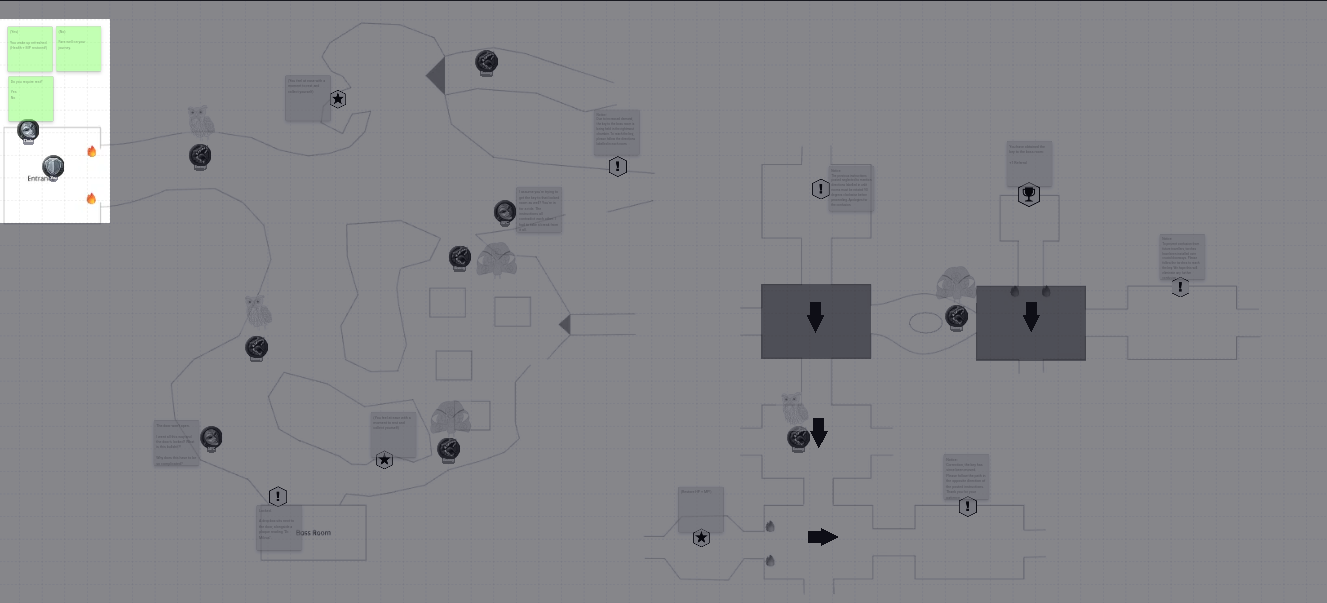
The owlbear map, complete with fog of war, interactable NPCs and signs, all controlled by a game master.
I stitched the dungeon plan and puzzle together to make the map, and then Violet changed the dialogue to make it fit more how it will be in the final version. The playtest is run like a DND adventure, with the player choosing where to move and who to interact with, which is subsequently revealed by the GM. The playtest goes until they unlock the boss door to Dr. Milvus’ office.
After the play session, the participant is asked to answer several questions about their understanding of the general story and what various things featured in our playtest represent. These questions were created by Violet and me.
The actual playtest went quite well, with the player being able to properly understand the ideas behind the game with only the information featured in the playtest. They had done the puzzle in a strange way, directly disobeying the instructions given, but still explored the whole room, leading to them properly understanding what was going on.
Overall, I am quite happy with how this playtest went and the feedback we were given.
Playtest 2
The second playtest was much different. This time, I grabbed someone I didn’t know from the on-campus residence I am at. They weren’t very familiar with games, but like survival games. They ended up missing the memo of the game, and trial and error’d their way through the puzzle, even after reading the first sign they neglected to follow its instructions, as if it just had been glazed over. The same happened with the third sign, where she wanted to go toward the fire, not because of what it said, but because that was already something she said she was gonna do before reading the sign.
Overall, this is still really good data for our playtest, and gives us good feedback that we need to give the player more reason to want to read and engage with the narrative. When players do engage with it, they seem to understand it well, but some players just really aren’t interested in reading or looking for deeper subtext. Currently, I am unsure how to appeal to this type of player.
Playtest Report
Since I have started to run playtests, I also started on the playtest report. It’s not too much yet, but I took the objective and methodology we had decided on beforehand, and started filling in those appropriate sections on the document.
Leave a comment
Log in with itch.io to leave a comment.